Building Social World Models with Large Language Models
Authors: Haofei Yu, Yining Zhao, Guanyu Lin, Jiaxuan You
The authors propose a Social World Model (SWM) framework utilizing Large Language Models (LLMs) as the backbone. By mining temporal patterns in social data and optimizing the evidence lower bound, the paper learns state transition functions for social beliefs to predict belief evolution following major events.
Paper Summary
Problem
The paper addresses the challenge in social sciences of understanding and predicting how social beliefs evolve in response to events, such as policy changes or scientific breakthroughs, without requiring explicit human annotations linking events to belief shifts or expensive census data.
Method Overview
- Backbone: Large Language Models (LLMs)
- Key module: 状态编码、转换建模、后验引导机制
- Loss: Evidence Lower Bound (ELBO)
Takeaways
Personal understanding — corrections welcome
Experiments show SWM achieves state-of-the-art results on Kalshi data, significantly outperforming time-series foundation models; prediction market prices serve as high-fidelity proxies for social belief strength; and LLMs can capture semantically driven social dynamic transition rules.
Limitations & Questions
Reliance on prediction market data may not cover all social beliefs; the model's generalization to non-market social beliefs requires verification; and LLM inference incurs high computational costs.
Reading Notes
Personal reading notes. Original paper: arXiv:2606.11482v1.
arxiv_id: 2606.11482v1
Paper Reading Note: Building Social World Models with Large Language Models
1. Research Background and Motivation
The paper aims to address a fundamental challenge in social sciences: understanding and predicting how social beliefs evolve in response to events (such as policy changes or scientific breakthroughs). The authors note that while Large Language Models (LLMs) possess common sense knowledge and social intelligence, whether they can be utilized to model social belief dynamics following social events remains an unverified question.
The paper argues that social beliefs shape distinct human communities and human futures. For instance, beliefs regarding whether Artificial General Intelligence (AGI) will emerge within five years, or who will become the next US President, have profound implications. While some widely accepted beliefs are resistant to change, others are highly volatile and can undergo drastic shifts due to social events.
To intuitively demonstrate how social events shape future social beliefs, the paper cites real-world prediction market data. As shown in Figure 1, sudden events trigger abrupt shifts in multiple social beliefs. For example, the event of Donald Trump winning the presidential election on November 6, 2024, directly influenced public expectations regarding the Federal Reserve’s policy in December 2024, Solana cryptocurrency prices, and other political events.
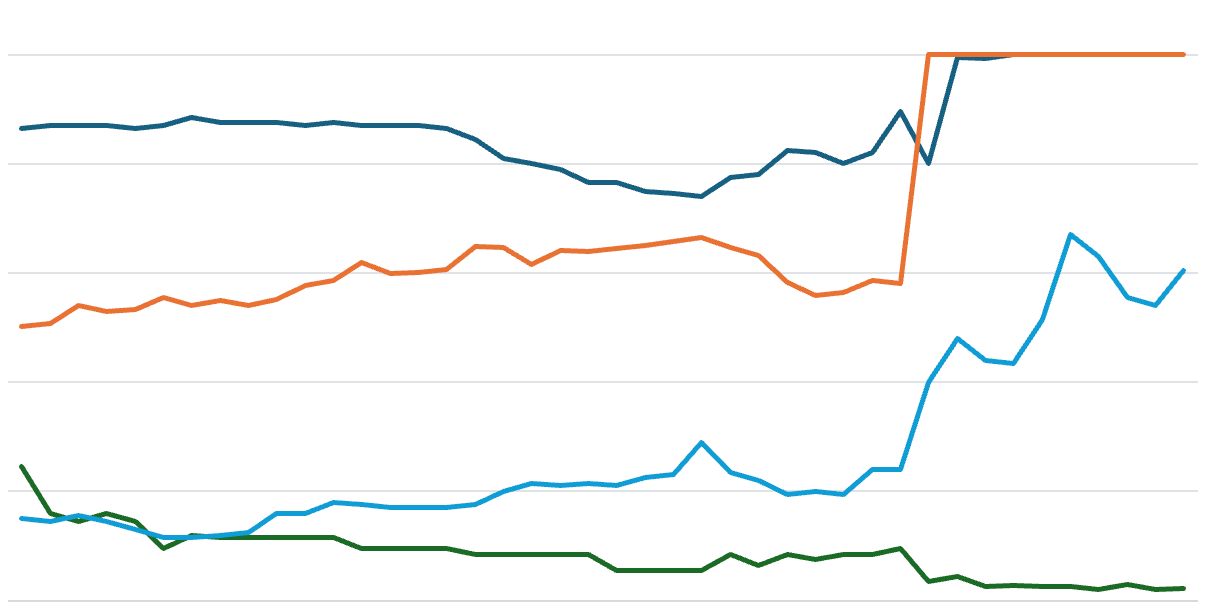
Figure 1 illustrates how social events shape future social beliefs. The top panel tracks a social belief varying over time (sourced from Polymarket data), where a breaking news event triggers sudden shifts in multiple beliefs. The bottom panel provides examples of how social events drive changes in social beliefs directly or indirectly. The goal of SWM is to predict the evolution of these beliefs based on historical states and (hypothetical) social events.
2. Three Challenges in Modeling Social Belief Dynamics
The paper points out that modeling the dynamics of social beliefs involves three hierarchical challenges, requiring a fundamental shift in methodology:
- Quantifiability and Data Scarcity (C1): Social beliefs are semantically driven and difficult to capture as structured data like physical states. The lack of high-fidelity time-series data makes establishing standardized benchmarks to evaluate belief evolution nearly impossible.
- Semantic Complexity of Social Transitions (C2): Even with data, the mechanisms governing social transitions are non-symbolic and semantically driven. Social dynamics are driven by subtle psychological and cultural contexts rather than explicit coded rules, meaning traditional statistical or symbolic models often fail to capture these implicit transition rules.
- Lack of Explicit Attribution Labels (C3): Even when belief shifts are observed, the relationship between specific events and those shifts is often obscured. The lack of explicit supervision labels linking events to belief shifts (i.e., “event-to-shift” labels) makes it difficult for models to learn the mechanisms behind social belief dynamics.
3. Social World Model (SWM) Framework
To address the above challenges, the authors propose the Social World Model (SWM). This is a generative framework that represents social belief dynamics through a state transition paradigm, i.e., .
Conceptually, SWM is similar to classic world models, treating collective beliefs as semantic states and social events as exogenous actions. The implementation of SWM involves three key technical breakthroughs:
- “State” Grounding via Prediction Market Data: To address data scarcity, the authors utilize prediction market data as a proxy for collective beliefs. Price fluctuations in prediction markets are treated as approximations of social belief strength.
- LLM as “Transition Engine”: To cope with semantic complexity, SWM leverages LLMs as the backbone. By utilizing the LLM’s large-scale pre-training on human discourse, it serves as a cognitive engine, providing the common sense reasoning and social knowledge necessary to simulate how complex contexts drive belief shifts.
- Posterior-guided Mechanism: To solve the problem of missing attribution labels, the authors introduce a posterior distribution. They utilize the observed future shift to provide a high-fidelity training signal. This “posterior-guided” approach enables the model to perform inverse reasoning, effectively collecting pseudo-labels for attribution, and endows SWM with counterfactual reasoning capabilities.
The paper presents an overview of the SWM training framework, as shown in Figure 2. The architecture employs an LLM as the backbone for three core components: state encoding, transition modeling, and posterior guidance.

Figure 2 shows an overview of the Social World Model training framework. The architecture employs an LLM as the backbone for three core components: state encoding, transition modeling, and posterior guidance.
4. Benchmark and Data Construction (SWM-Bench)
To evaluate SWM, the authors introduce a benchmark SWM-Bench. This benchmark is derived from real-world prediction markets, specifically including the Kalshi and Polymarket platforms.
SWM-Bench contains over 12,000 data points covering social belief prediction tasks across multiple domains, including politics, finance, and cryptocurrency. The authors chose prediction market data due to three key characteristics:
- Uncertainty Constraint: Markets naturally form around uncertain outcomes, filtering out trivial or universally consensual knowledge.
- Diversity and Scale: A broad participant base ensures that price signals represent wider public opinion rather than self-selected user groups.
- High Fidelity: It converts latent social beliefs into a measurable, high-fidelity time-series format, providing the necessary Ground Truth for evaluating belief evolution.
5. Experimental Results and Analysis
The paper conducts empirical evaluations on SWM-Bench, showing that SWM performs excellently in multiple aspects:
- Kalshi Dataset: SWM achieved State-of-the-Art (SOTA) results, improving Directional Accuracy by 4% compared to baseline models such as GPT-5.5.
- Polymarket Dataset: SWM demonstrated competitive performance.
- Interpretability: Beyond prediction performance, SWM provides interpretable insights into the underlying mechanisms of social belief dynamics.
Experimental results indicate that SWM significantly outperforms time-series foundation models. The authors attribute this to SWM’s ability to capture semantic-driven, implicit social dynamic transition rules, rather than merely fitting numerical patterns.
6. Summary and Contributions
The core contributions of the paper can be summarized in three points:
- Established SWM-Bench: This is one of the first evaluation benchmarks organized from real-world prediction market data, converting social beliefs into a quantifiable time-series format.
- Introduced the Social World Model Framework: Utilizes an LLM-driven architecture to capture the semantic-driven, implicit transition rules of social dynamics.
- Proposed a Posterior Supervision Training Paradigm: By decoupling social reasoning from dynamic modeling, it addresses the attribution label problem.
In summary, this work provides a new pipeline for modeling and predicting social consensus, demonstrating the potential of utilizing LLMs to understand social belief dynamics.
This note was included in the arXiv daily digest 20260616. More roundups at blog archive .