
BTS-rPPG: Orthogonal Butterfly Temporal Shifting for Remote Photoplethysmography
Authors: Ba-Thinh Nguyen, Thi-Duyen Ngo, Thanh-Trung Huynh, Thanh-Ha Le, Huy-Hieu Pham
Orthogonal Butterfly Temporal Shifting to expand the temporal receptive field.
Paper Summary
Problem
The authors propose a framework based on Orthogonal Butterfly Temporal Shifting (BTS) to address limitations in local temporal modeling. By establishing structured frame interactions through XOR pairing scheduling, the paper enhances temporal dynamic capture.
Method Overview
- Backbone: (阅读笔记待补充)
- Key module: (阅读笔记待补充)
- Loss: (阅读笔记待补充)
Takeaways
Personal understanding — corrections welcome
The paper highlights a framework based on Orthogonal Butterfly Temporal Shifting (BTS) to overcome local temporal modeling constraints. It utilizes XOR pairing scheduling to establish structured frame interactions, improving the capture of temporal dynamics.
Limitations & Questions
Limitations are pending supplementation in reading notes; discussion is welcome.
Reading Notes
Personal reading notes. Original paper: arXiv:2604.01679v1.
arxiv_id: 2604.01679v1
Paper Deep Dive: BTS-rPPG - Photoplethysmography Measurement Based on Orthogonal Butterfly Temporal Shifting
1. Research Background and Motivation
Remote Photoplethysmography (rPPG) is a technology for contactless sensing of physiological signals through subtle appearance changes in facial videos caused by blood circulation. Although deep learning-based rPPG methods have made significant progress in spatiotemporal representation learning, they still face challenges in temporal dynamic modeling.
Existing methods mostly rely on Temporal Shifting or convolutional operators. These operations primarily aggregate information from adjacent frames, leading to a limited temporal receptive field, mainly confined to local temporal modeling. However, appearance changes induced by the heart evolve over longer time spans. Local interactions limit the model’s ability to capture long-range temporal dependencies crucial for physiological signal modeling.
To address this limitation, this paper proposes BTS-rPPG, a temporal modeling framework based on Orthogonal Butterfly Temporal Shifting (BTS). Inspired by the butterfly communication patterns in the Fast Fourier Transform (FFT), this method establishes structured frame interactions through an XOR-based butterfly pairing schedule, gradually expanding the temporal receptive field to achieve efficient information propagation between distant frames.
2. Core Method: BTS-rPPG Framework
The core innovation of BTS-rPPG lies in introducing a structured temporal interaction mechanism to replace traditional local neighborhood aggregation. The overall framework includes an input representation module, a BTS-enhanced Swin Transformer backbone, and a prediction head.
2.1 Overall Architecture
As shown in Figure 2, the processing flow of BTS-rPPG is divided into three main parts:
- Input Representation: Fuses RGB frames and their Normalized Difference Frames (NDF) to emphasize subtle temporal appearance changes, embedding them as patch-level tokens.
- Backbone: Adopts the Swin Transformer architecture, with BTS modules integrated into its stages.
- Predictor Head: Regresses the processed features to the target rPPG waveform.

Figure 2: Overview of BTS-rPPG Framework (from embedded figure on PDF page 3). Shows the complete process from input representation to BTS-enhanced backbone network to predictor head. Part II) shows the OFT mechanism, and Part III) shows the hierarchical communication mode of BTS.
2.2 Orthogonal Butterfly Temporal Shifting (BTS)
The temporal communication pattern of traditional methods is mainly limited to feature exchange between adjacent frames, restricting long-range interactions. BTS-rPPG introduces a butterfly communication pattern inspired by FFT.

Figure 1: Comparison of Temporal Communication Patterns (from embedded figure on PDF page 1). (a) Existing methods mainly exchange features between adjacent frames, limiting long-range temporal interaction; (b) The proposed BTS-rPPG adopts a butterfly-inspired hierarchical communication scheme, similar to FFT-style sparse multi-stage mixing, gradually expanding temporal interaction from local to global scales.
The BTS mechanism establishes structured frame interactions through an XOR-based butterfly pairing schedule. This design allows the temporal receptive field to expand gradually as network depth increases, effectively propagating information from short-range to long-range dependencies. This is highly suitable for rPPG signals characterized by short-term continuity and long-range periodic dependencies.
2.3 Orthogonal Feature Transfer (OFT)
When directly exchanging features across frames, redundant information may be introduced. Many shift-operator-based methods (such as TCS) transfer features between frames with high correlation, leading to redundant propagation.
To address this issue, the authors introduce the Orthogonal Feature Transfer (OFT) mechanism. This mechanism filters source features based on the target context before temporal shifting, retaining only orthogonal components for cross-frame transfer.

Figure 3: Details of OFT Mechanism (from embedded figure on PDF page 3). Shows how OFT suppresses redundant transfer information by retaining feature components orthogonal to the target context, thereby promoting complementary temporal exchange.
By transferring only information complementary to the target representation, OFT reduces redundancy and encourages more effective temporal interaction between frames.
3. Experiments and Results
The authors conducted extensive experiments on multiple benchmark datasets to verify the effectiveness of BTS-rPPG in capturing long-range physiological dynamics.
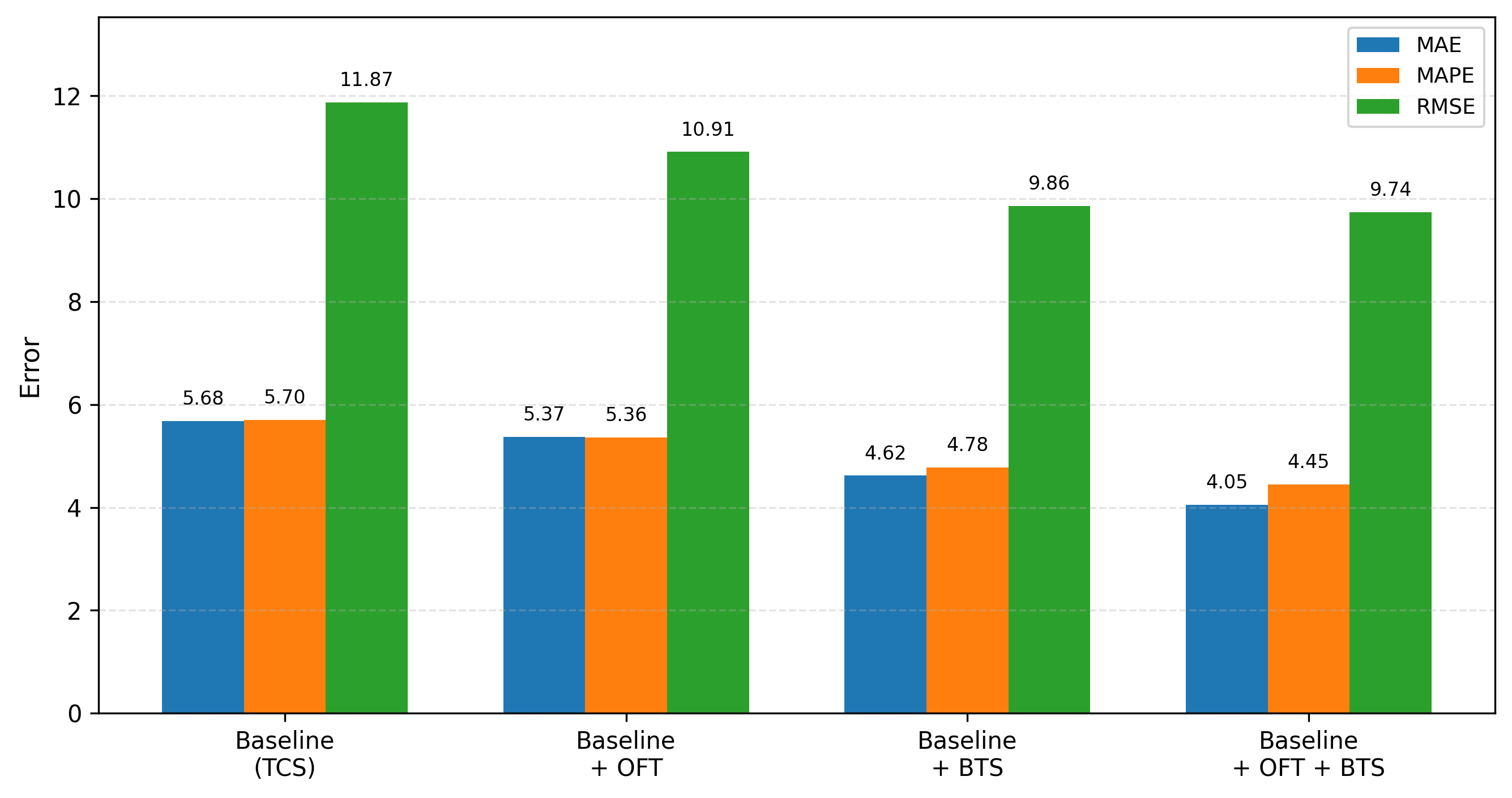
Figure 4: Quantitative Experimental Results Comparison (from embedded figure on PDF page 6). Shows the performance of BTS-rPPG on different datasets, generally outperforming existing temporal modeling strategies.
Experimental results indicate that BTS-rPPG can consistently improve rPPG estimation performance. Additionally, the paper analyzes the contributions of BTS and OFT components through ablation studies.
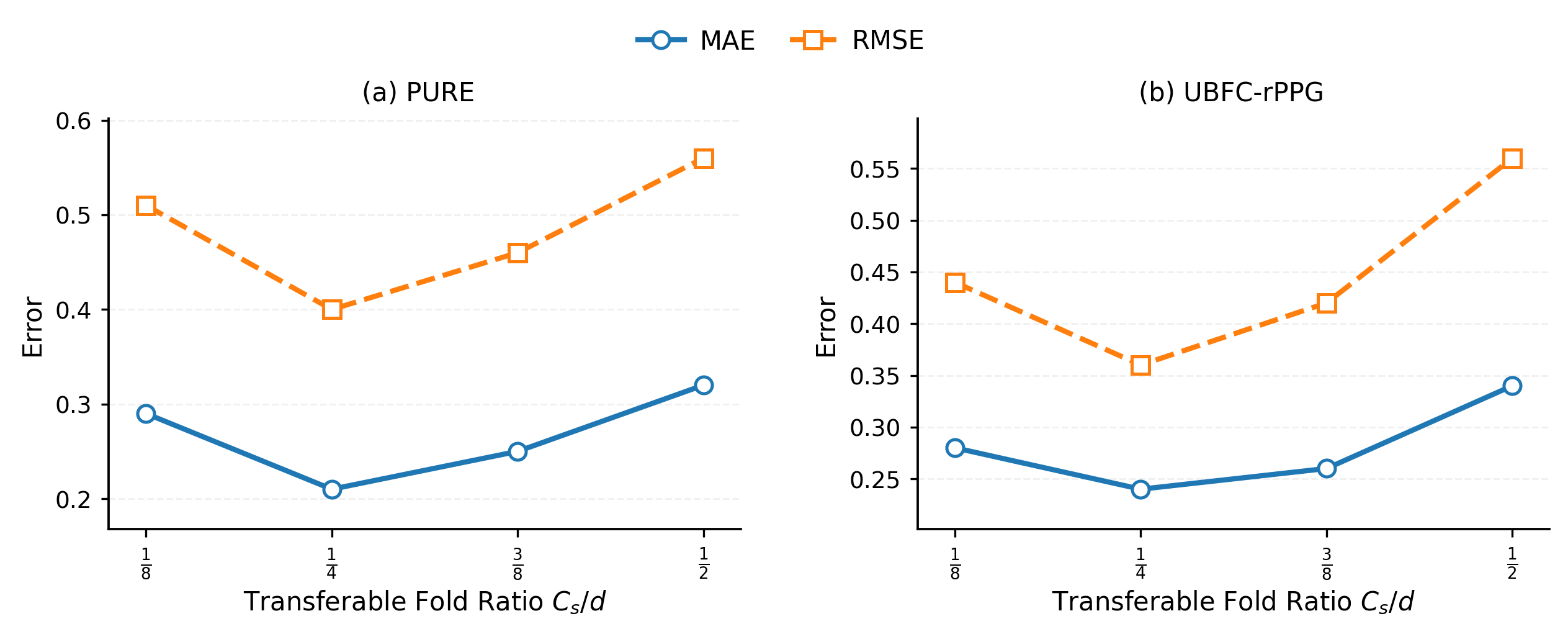
Figure 5: Ablation Study and Design Analysis (from embedded figure on PDF page 7). Shows the contribution analysis of different components to the final performance.
4. Summary and Outlook
The BTS-rPPG framework proposed in this paper effectively addresses the issues of limited temporal receptive field and feature redundancy in existing rPPG methods by introducing the Orthogonal Butterfly Temporal Shifting (BTS) and Orthogonal Feature Transfer (OFT) mechanisms.
Summary of Main Contributions:
- Introduced BTS, a structured temporal interaction mechanism that establishes long-range frame communication through an XOR-based butterfly pairing schedule.
- Proposed OFT, which filters source features before temporal shifting, retaining only orthogonal components to reduce redundant temporal communication.
- Experiments on multiple benchmark datasets demonstrate that BTS-rPPG can effectively capture long-range physiological dynamics and consistently improve rPPG estimation performance.
Future work can further explore the applicability of this mechanism in other temporal physiological signal analysis tasks, as well as its robustness under more complex environmental interference.
This note was included in the arXiv daily digest 20260614. More roundups at blog archive .