HOT: Harmonic-Constrained Optimal Transport for Remote Photoplethysmography Domain Adaptation
Authors: Ba-Thinh Nguyen, Thi-Duyen Ngo, Thanh-Trung Huynh, Thanh-Ha Le, Huy-Hieu Pham
The authors propose harmonic-constrained optimal transport to address cross-domain appearance variation issues.
Paper Summary
Problem
The paper introduces a frequency-domain adaptation strategy that models appearance changes by transferring low-frequency spectral components. It encourages the model to learn invariance to appearance variations like lighting and camera differences, improving cross-domain performance.
Method Overview
- Backbone: (阅读笔记待补充)
- Key module: (阅读笔记待补充)
- Loss: (阅读笔记待补充)
Takeaways
Personal understanding — corrections welcome
The core insight is introducing a frequency-domain adaptation strategy where low-frequency spectral components are transferred to model appearance changes, encouraging the model to learn invariance to lighting and camera variations for better cross-domain performance.
Limitations & Questions
Limitations are pending further documentation.
Reading Notes
Personal reading notes. Original paper: arXiv:2604.01675v1.
arxiv_id: 2604.01675v1
HOT: Remote Photoplethysmography Domain Adaptation Based on Harmonic-Constrained Optimal Transport
1. Research Background and Motivation
Remote Photoplethysmography (rPPG) technology can measure physiological signals (such as Blood Volume Pulse, BVP, and Heart Rate) non-invasively from facial videos. Although deep learning-based rPPG methods perform well on single datasets, model performance often significantly decreases in practical deployment due to the presence of Domain Shift.
This performance degradation mainly stems from the model overfitting to appearance-related factors, such as lighting conditions, camera characteristics, and color responses. These factors vary greatly across different datasets or shooting environments, making models trained on the source domain difficult to generalize to the target domain. Existing methods mostly handle domain shift implicitly through architecture design or feature regularization, lacking explicit data-level domain transfer strategies.
To intuitively demonstrate the difference between existing methods and the proposed method, the paper provides a comparative schematic diagram:

Figure 1: Comparison between existing rPPG methods and the proposed method. Traditional methods are trained on the source domain and directly deployed to the target domain, leading to performance degradation; this paper synthesizes source data with target domain appearance using unlabeled target domain samples to encourage appearance-invariant learning (from embedded figure on page 1 of PDF).
2. Core Method: FDA and HOT
To address the above challenges, this paper proposes the HOT (Harmonic-Constrained Optimal Transport) framework. The framework consists of two core components: Frequency Domain Adaptation (FDA) and Harmonic-Constrained Optimal Transport (HOT). The overall architecture is shown below:
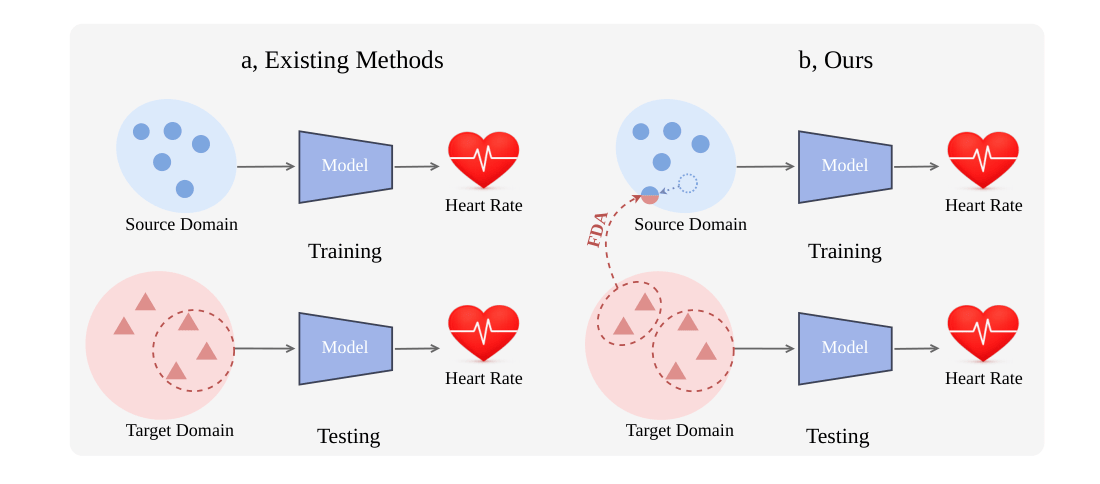
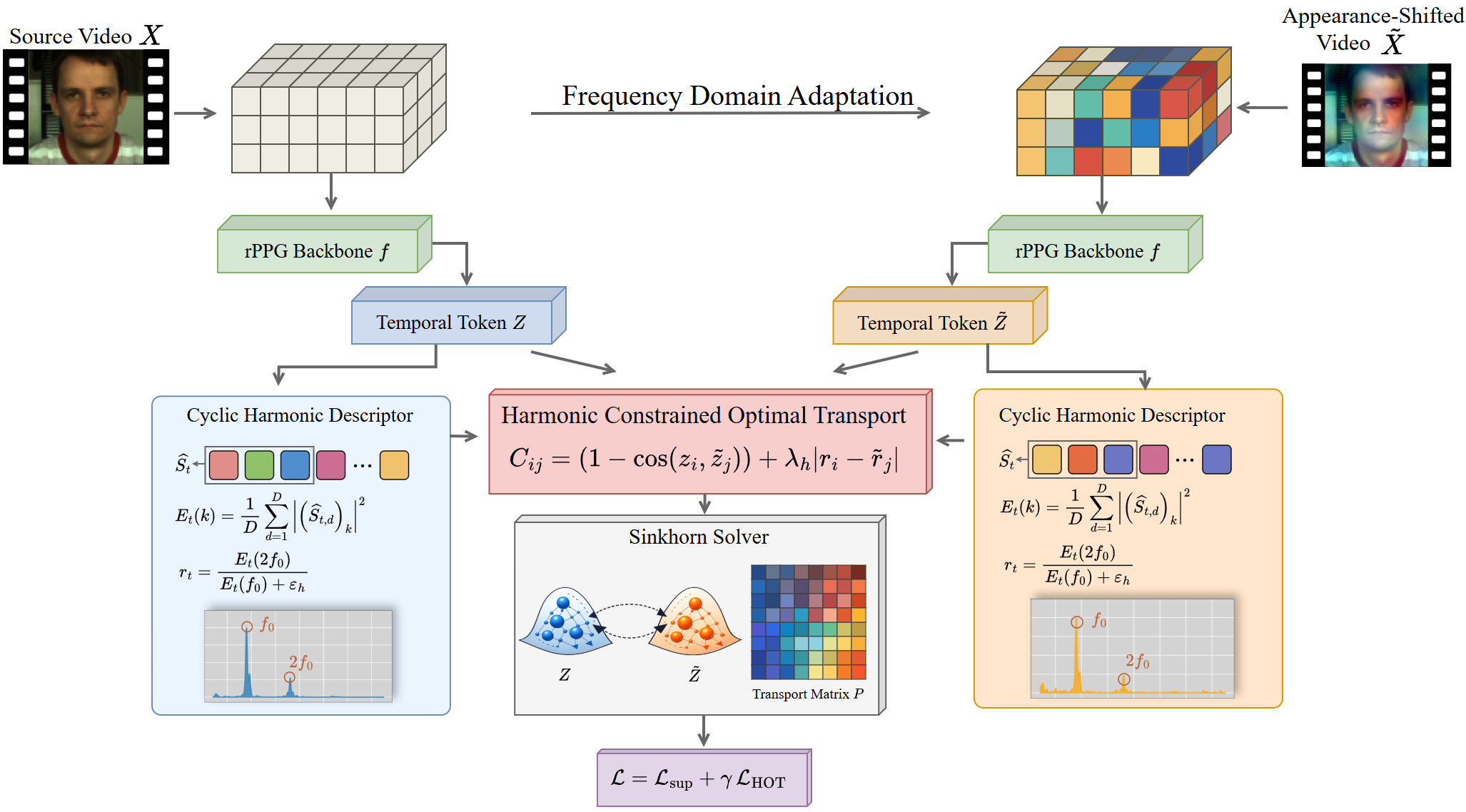
Figure 2: Overall architecture of HOT. It shows the process from source domain video input, generating appearance-shifted samples via FDA, to physiological consistency alignment via HOT (from embedded figure on page 1 of PDF).
2.1 Frequency Domain Adaptation (FDA)
FDA is a principled strategy for modeling rPPG appearance changes. Its core idea is: low-frequency spectral components encode domain-dependent appearance features (such as lighting, skin tone), while high-frequency components retain more semantic content (such as heart-induced signals).
FDA is implemented through the following steps:
- Frequency Transform: Perform channel-level 2D Discrete Fourier Transform on source domain video frames and target domain reference frames to obtain magnitude spectrum and phase spectrum .
- Spectrum Replacement: Define a central low-frequency region and construct a binary mask . Only replace the low-frequency magnitude components of the source domain frame with those of the target domain frame, preserving the high-frequency magnitude and phase of the source domain.
- Inverse Transform: Combine the adapted magnitude spectrum with the original phase spectrum to obtain the stylized frame via inverse Fourier transform.
This process ensures that the generated training samples simulate target domain appearance changes while preserving underlying physiological dynamics. The specific process is visualized as follows:
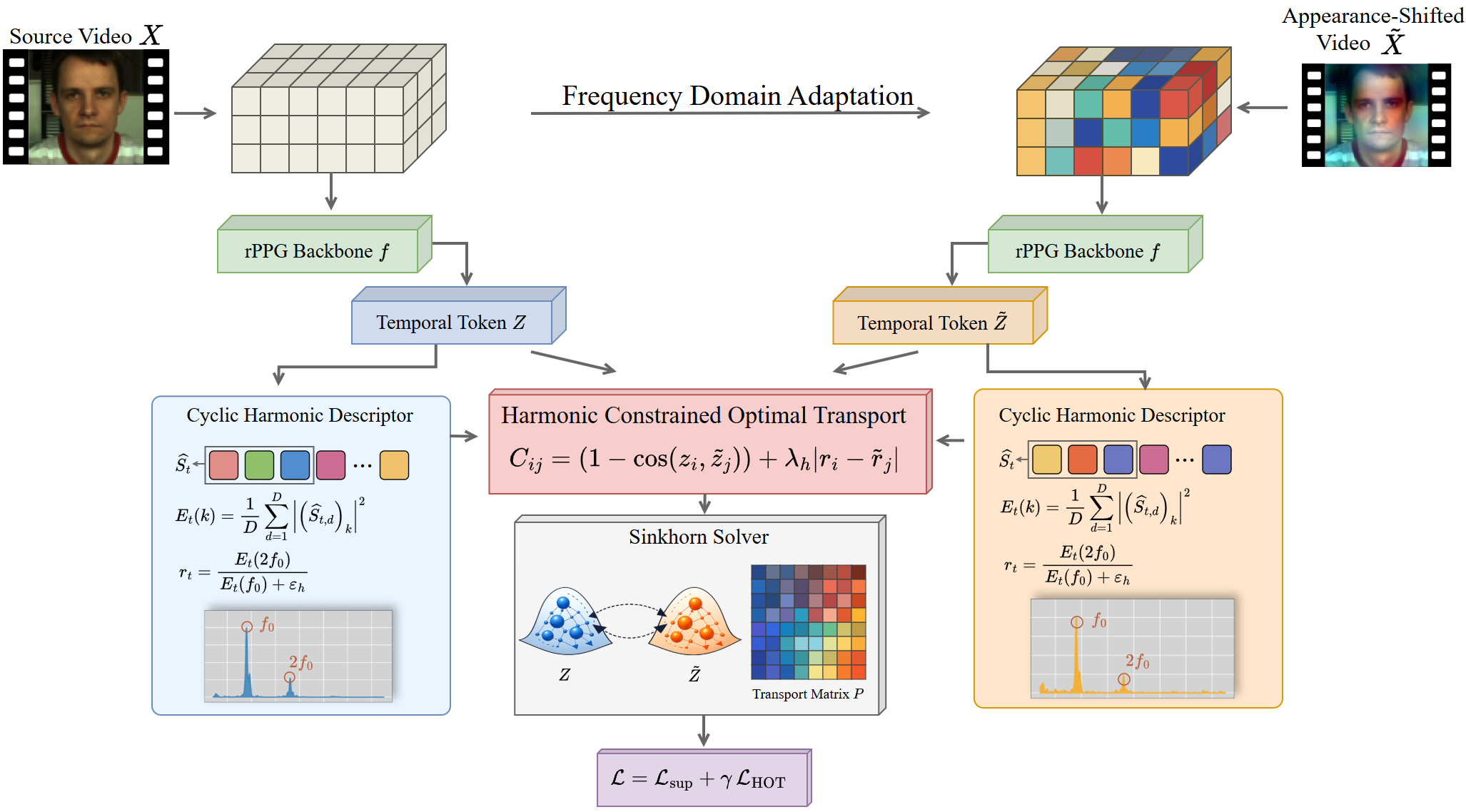
Figure 3: Schematic diagram of the FDA frequency domain adaptation process. It shows how to replace the low-frequency magnitude spectrum to transfer appearance features (from embedded figure on page 3 of PDF).
2.2 Harmonic-Constrained Optimal Transport (HOT)
Forcing consistency between original samples and FDA-transferred samples solely through embedding similarity may lead to correspondences that are geometrically consistent but physiologically incompatible. To solve this problem, this paper proposes HOT.
HOT models time alignment as an optimal transport problem and introduces a harmonic regularization term into the transport cost. Heart signals have significant harmonic characteristics (periodicity). HOT utilizes this prior knowledge to guide the alignment process, making the transport plan favor token correspondences that are physiologically consistent under appearance changes. This method ensures that the temporal structure of physiological signals is preserved while appearance changes occur.
3. Experimental Verification and Analysis
The paper validates the proposed FDA + HOT framework on multiple cross-dataset experiments. Experimental results show that this method can effectively enhance the robustness and generalization ability of rPPG models across different datasets.
To further analyze the contribution of each component and model performance, the paper provides detailed experimental result charts. The following are visualizations of some key experimental results:
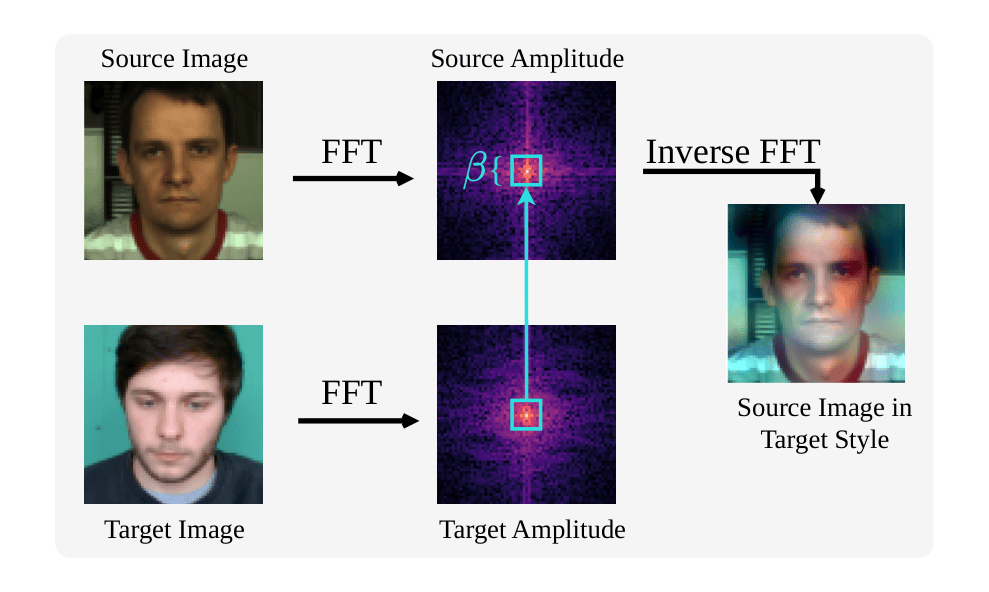
Figure 4: Schematic diagram of experimental result comparison or ablation analysis (from embedded figure on page 4 of PDF).
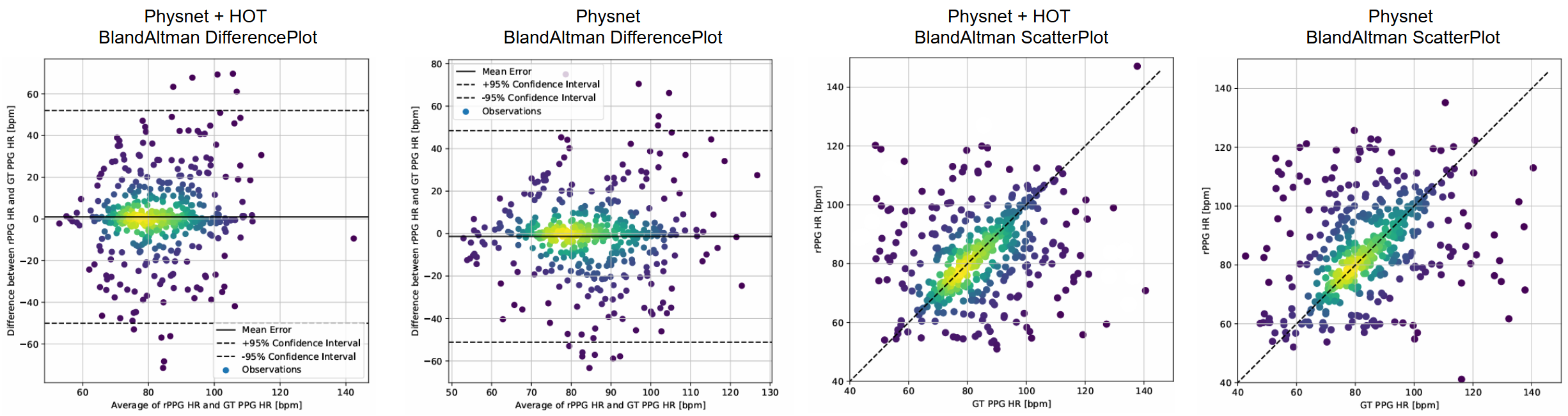
Figure 5: Cross-dataset performance evaluation or visualization results (from embedded figure on page 6 of PDF).
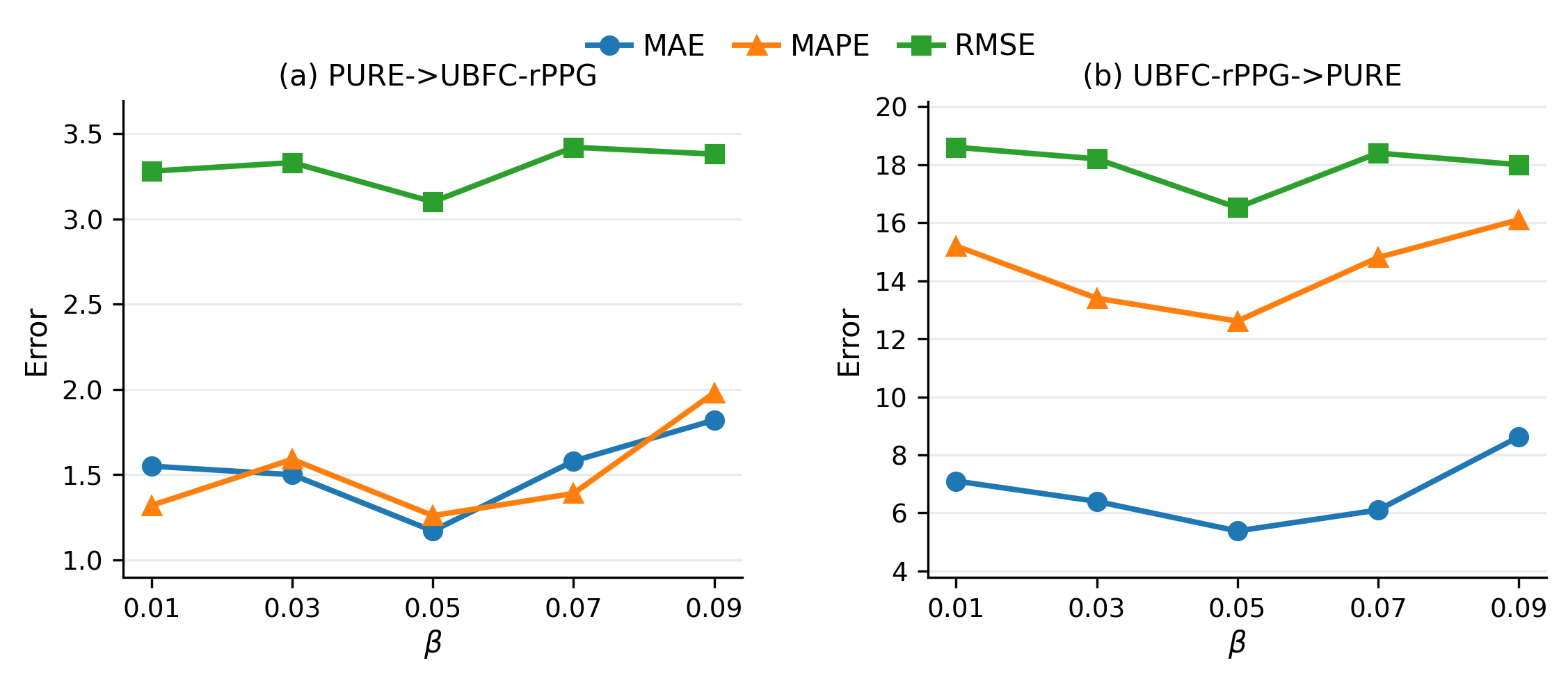
Figure 6: Sensitivity analysis or further result presentation (from embedded figure on page 7 of PDF).
4. Summary and Outlook
This paper is the first to introduce Frequency Domain Adaptation (FDA) into rPPG domain generalization research and proposes Harmonic-Constrained Optimal Transport (HOT) to ensure physiological consistency. The main contributions are summarized as follows:
- FDA Framework: Generates appearance-shifted training videos using unlabeled target data to better simulate target domain changes.
- HOT Method: Applies harmonic constraints in Sinkhorn transport to encourage physiological consistency alignment between original representations and FDA-transferred representations.
- Experimental Validation: Extensive cross-dataset experiments and ablation studies prove that the FDA + HOT framework consistently improves cross-domain rPPG estimation performance.
Future research directions may include exploring more complex physiological constraints, extending to the estimation of more physiological signals (such as respiration rate), and verifying model robustness under more extreme environmental changes.
This note was included in the arXiv daily digest 20260614. More roundups at blog archive .