PHASE-Net: Physics-Grounded Harmonic Attention System for Efficient Remote Photoplethysmography Measurement
Authors: Bo Zhao, Dan Guo, Junzhe Cao, Yong Xu, Bochao Zou
The authors propose a physics-driven model based on the Navier-Stokes equations to enhance interpretability.
Paper Summary
Problem
The authors propose a physics-informed rPPG paradigm and deduce that pulse signals conform to a second-order dynamic system. They design a lightweight model featuring a zero FLOPs axial exchange module to enhance robustness.
Method Overview
- Backbone: (阅读笔记待补充)
- Key module: (阅读笔记待补充)
- Loss: (阅读笔记待补充)
Takeaways
Personal understanding — corrections welcome
Key points from the abstract: The authors propose a physics-informed rPPG paradigm, deducing that pulse signals follow a second-order dynamic system. They design a lightweight model with a zero FLOPs axial exchange module to boost robustness.
Limitations & Questions
Limitations are pending further reading notes and discussion.
Reading Notes
Personal reading notes. Original paper: arXiv:2509.24850v3.
PHASE-Net: In-depth Interpretation of Physics-Based Remote Photoplethysmography Measurement
Paper ID: 2509.24850v3
Title: PHASE-Net: Physics-Grounded Harmonic Attention System for Efficient Remote Photoplethysmography Measurement
Authors: Bo Zhao, Dan Guo, Junzhe Cao, Yong Xu, Bochao Zou, Tao Tan, Yue Sun, Zitong Yu
Source: arXiv (2026)
1. Research Background and Motivation
Remote Photoplethysmography (rPPG) technology enables non-contact monitoring of physiological signals such as heart rate using ordinary cameras, holding significant potential in fields like personal health tracking and driver monitoring. However, rPPG signals are extremely weak and highly susceptible to noise interference from head movements, facial expression changes, and environmental lighting fluctuations, leading to reduced measurement accuracy.
Although existing deep learning-based methods outperform traditional signal processing techniques, they suffer from two core deficiencies:
- Heuristic Design: Network architectures are largely based on empirical trial and error, lacking a deep understanding of the underlying physical laws of physiological signals.
- Black-box Nature: Lacking theoretical support, models exhibit weak generalization capabilities under unseen conditions, and their decision-making processes are difficult to interpret.
Addressing these issues, this paper proposes a Physics-informed rPPG paradigm, aiming to construct a model that is both theoretically rigorous and capable of efficient deployment—PHASE-Net—starting from first principles.
2. Core Theoretical Breakthrough: From Navier-Stokes Equations to TCN
The most significant contribution of this paper lies in establishing a theoretical bridge between physiological dynamics and neural network architectures. The authors do not treat the model as a pure data-fitting tool but derive a physical model of hemodynamics starting from the Navier-Stokes equations of fluid mechanics.
2.1 Physical Modeling Derivation
Through rigorous mathematical derivation, the paper reveals that local pulse wave dynamics can physically be described as a second-order damped harmonic oscillator model.
- Physical Observation Model: Based on the Beer–Lambert law and vascular compliance, the change in pixel intensity is proportional to the subcutaneous blood volume change and local blood pressure pulsation .
- Dynamics Equation: The pulse signal follows a second-order differential equation.
- Discretization Equivalence: The discrete-time solution of this physical model is formally equivalent to a causal convolution operator.
This finding provides indisputable theoretical justification for using a Temporal Convolutional Network (TCN) as the core dynamic modeling module, endowing the model with a powerful inductive bias that aligns with physical laws.
3. PHASE-Net Network Architecture Overview
PHASE-Net is a lightweight model, with its overall architecture shown in the figure below. The figure illustrates the complete process from video input to pulse signal output, including the visual encoder, adaptive spatial filter, and gated TCN module.
Caption: Overview of the PHASE-Net architecture. Adapted from embedded figure on page 3 of the PDF (corresponding to Paper Figure 1).
The architecture mainly consists of three parts:
- Vision Encoder: Composed of stacked Efficient Spatio-Temporal Blocks (ESTBlock) to extract spatio-temporal features from video input.
- Adaptive Spatial Filter (ASF): Performs spatial filtering and differential operations on features to enhance signal regions and suppress noise.
- Gated TCN (Gated Temporal Convolutional Network, GTCN): A causal convolution structure based on physical derivation, used to model long-range temporal dynamics to recover the pulse signal.
4. Deep Dive into Key Modules
The innovation of PHASE-Net is reflected in the design of its three key components, which collectively address cross-region feature interaction, spatial noise suppression, and long-sequence modeling issues.
4.1 Zero-FLOPs Axial Swapper (ZAS)
The ZAS module is introduced within the ESTBlock of the visual encoder.
- Function: Performs exchange or transpose operations on a small number of spatial channels.
- Purpose: To mix distant facial regions without altering the temporal order, enhancing cross-region feature interaction.
- Advantage: This operation is reversible and adds no computational cost (Zero-FLOPs), effectively strengthening long-range spatial dependencies.
4.2 Adaptive Spatial Filter (ASF)
This module aims to handle spatial noise interference.
- Soft Mask Learning: Learns a soft spatial mask for each frame to highlight signal-rich facial regions and suppress noise.
- Spatio-Temporal Aggregation: Performs not only spatial aggregation but also calculates the first-order time derivative, concatenating it with aggregated features.
- Effect: Encodes local pulse dynamics, significantly improving the model’s robustness under complex real-world conditions.
4.3 Gated Temporal Convolutional Network (GTCN)
This is the core module based on physical derivation.
- Structure: Causal dilated TCN combined with a gating mechanism.
- Gating Design: Uses tanh and sigmoid gates for feature fusion.
- Function: Precisely models long-range temporal dynamics to ensure the accuracy of pulse signal recovery. Its structure directly corresponds to the discrete solution of the physical dynamics derived earlier.
5. Experimental Results and Performance Analysis
The paper conducts extensive experiments on multiple public datasets to verify the state-of-the-art performance and efficiency of PHASE-Net. The following charts show partial experimental comparisons and ablation study results (adapted from page 15 of the PDF).
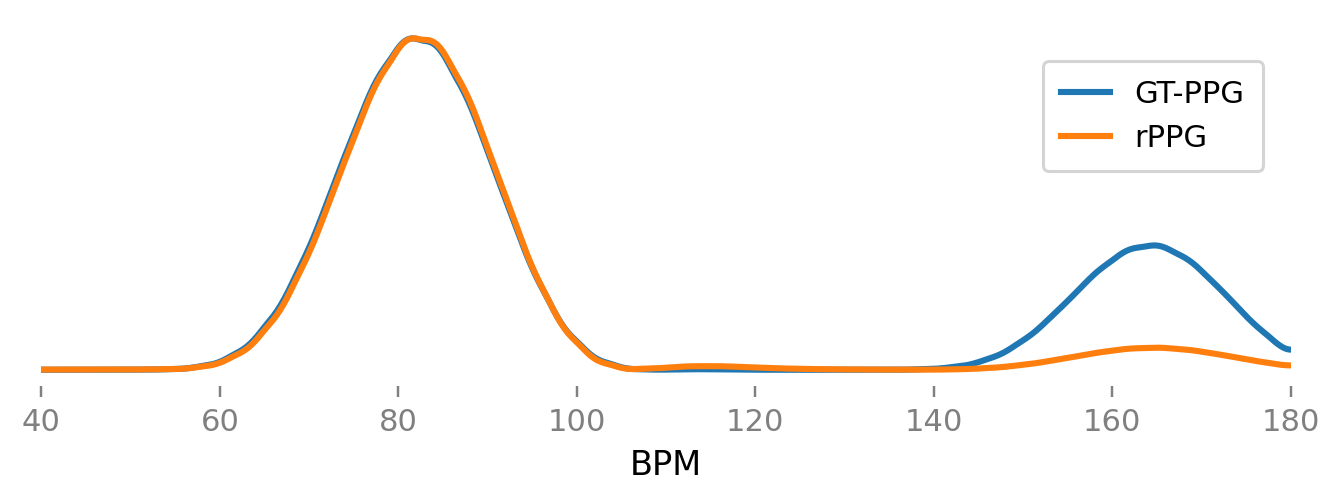
Caption: Experimental performance comparison results. Adapted from embedded figure on page 15 of the PDF.
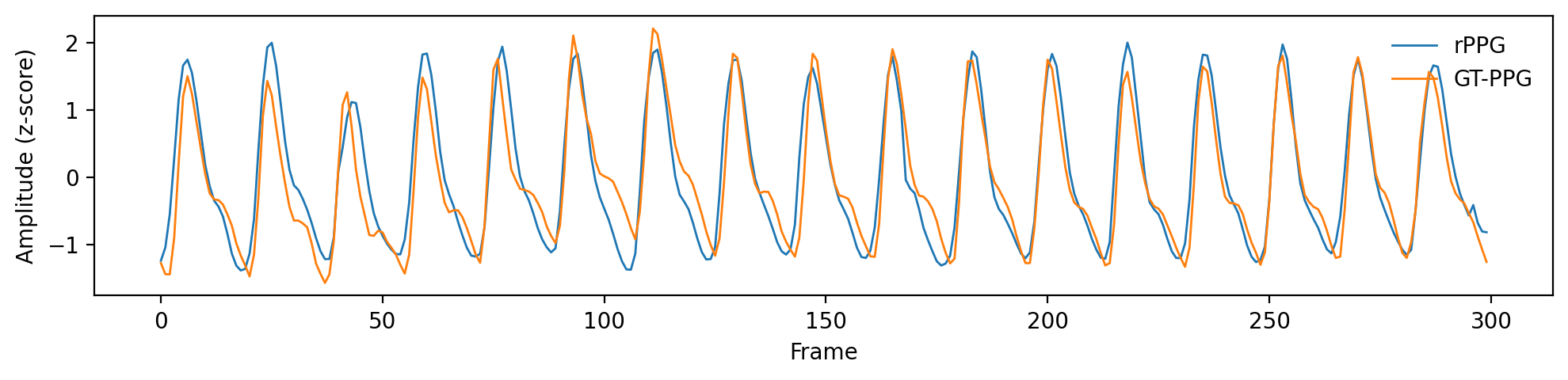
Caption: Ablation study analysis of different modules. Adapted from embedded figure on page 15 of the PDF.
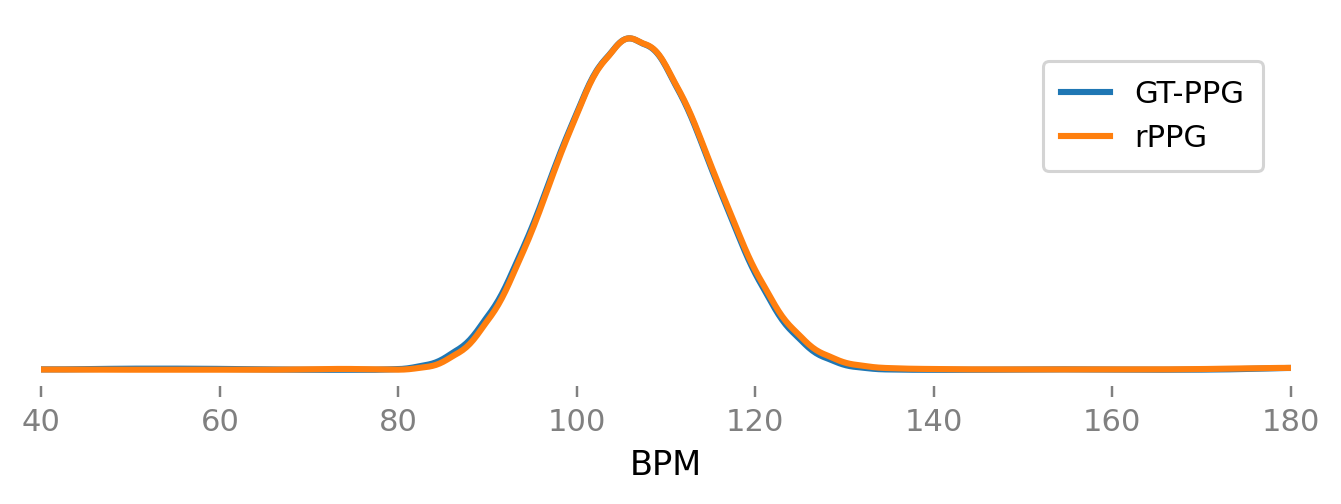
Caption: Model efficiency and accuracy trade-off analysis. Adapted from embedded figure on page 15 of the PDF.
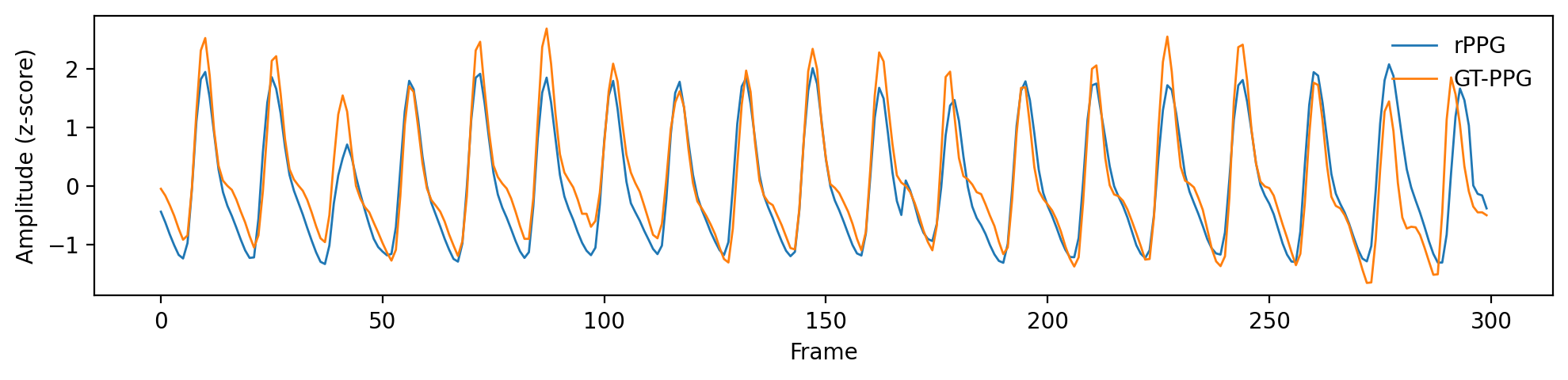
Caption: Signal recovery visualization in complex scenarios. Adapted from embedded figure on page 15 of the PDF.
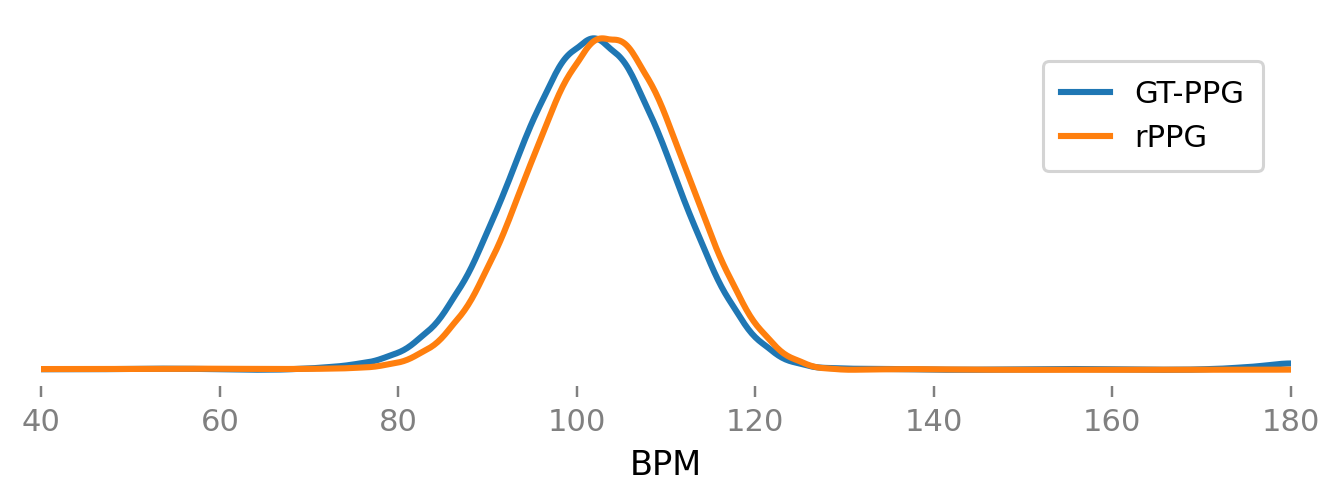
Caption: Detailed comparison with other SOTA methods. Adapted from embedded figure on page 15 of the PDF.
Experimental results indicate:
- SOTA Performance: PHASE-Net achieves State-of-the-Art performance levels in multiple benchmarks.
- Efficiency: While maintaining high performance, the model architecture is extremely lightweight, suitable for practical deployment.
- Robustness: Benefiting from physical priors and the ASF module, the model performs stably under motion interference and lighting changes.
6. Summary and Outlook
PHASE-Net proposes a new rPPG modeling paradigm, successfully combining fluid dynamics first principles with deep learning architectures.
- Theoretical Contribution: For the first time, establishes a theoretical link between physiological dynamics and causal convolution networks, proving the physical rationality of TCN in rPPG tasks.
- Technical Contribution: Designs three innovative modules—ZAS, ASF, and GTCN—balancing feature interaction, noise suppression, and temporal modeling.
- Application Value: Provides a theoretically rigorous and engineering-efficient solution; the code is open-sourced (https://github.com/Alex036225/PhaseNet).
This work demonstrates that incorporating physical principles into neural network design can not only improve model interpretability but also achieve better generalization capabilities in scenarios with scarce data or complex noise, providing a new direction for future physiological signal monitoring research.
This note was included in the arXiv daily digest 20260614. More roundups at blog archive .